Why Drainage Is Crucial for Fort Worth Homes
How Poor Drainage Affects Your Foundation
In Fort Worth, homes are often built on clay rich soil that reacts strongly to moisture. When water collects around the foundation due to poor drainage, that soil expands. Later, when it dries, it contracts. This constant movement causes stress on your foundation, leading to cracking, shifting, and long-term structural problems.
If rainwater pools near your home after every storm, the moisture can seep into the slab or crawlspace. This weakens the concrete over time and can result in uneven floors, sticking doors, or cracked walls. Moisture problems also lead to mildew, wood rot, and pest issues. What may seem like a minor puddle outside can become a major interior problem without proper drainage in place.
The Impact of Texas Soil and Weather Conditions
North Texas weather is unpredictable. Long periods of drought are often followed by intense rainfall. This back and forth creates constant expansion and contraction in the soil beneath your home. These movements apply pressure on your foundation from below and around the sides.
During drought, the soil may shrink and leave gaps under your foundation. Heavy rain then rushes in to fill those voids, creating instability. Without a proper drainage system to carry water away from your property, this cycle leads to major foundation problems that can become expensive to repair.
Warning Signs of Poor Drainage Around Your Home
Visible Water Pooling and Erosion
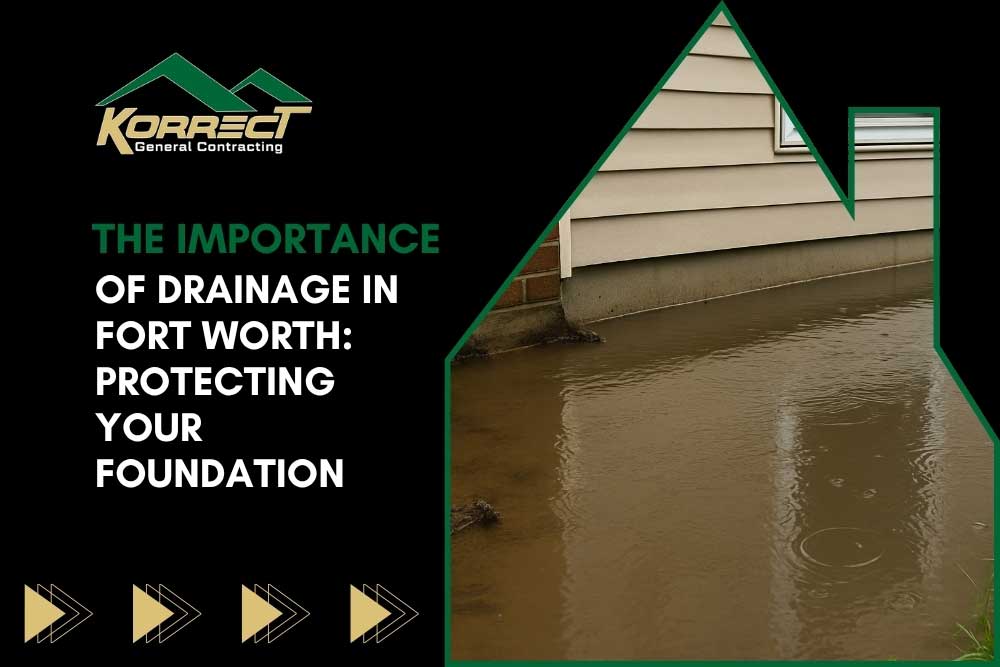
When rainwater collects near your home instead of draining away, your foundation is at risk. Look for puddles that stick around hours or days after a storm. These low spots may seem harmless, but they indicate that the ground is not sloped correctly to divert water away.
You may also see signs of erosion, such as washed out flower beds, displaced mulch, or exposed tree roots. These issues affect curb appeal, but they also show that water is eating away at the soil that supports your foundation. Even if water is not entering your home yet, the long-term impact of erosion is a weakening of the ground beneath your structure.
Cracks in Walls and Uneven Surfaces
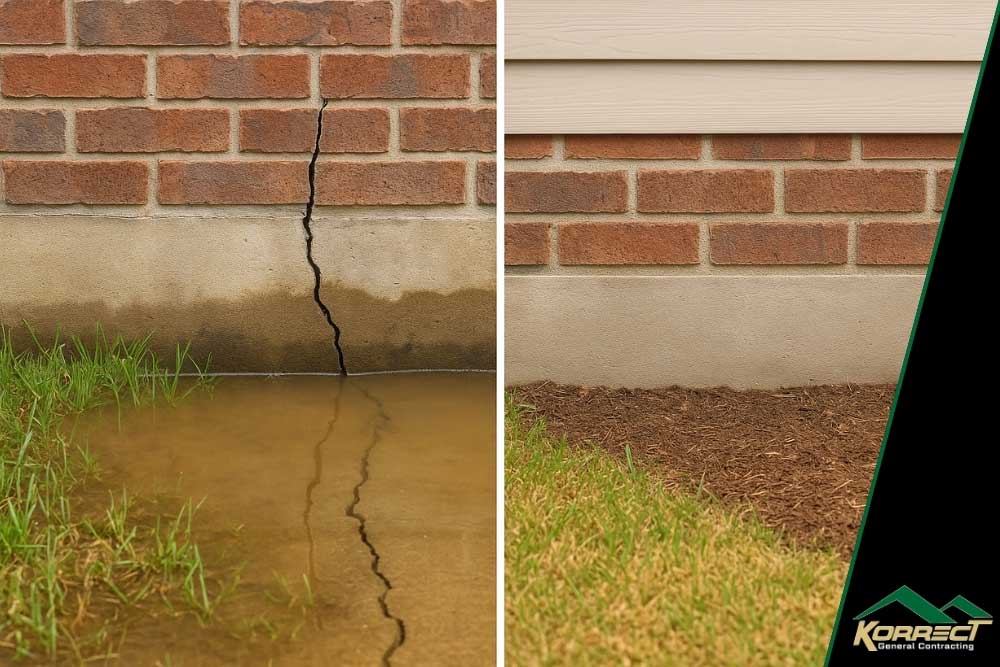
Cracks in brickwork, siding, drywall, or flooring are often linked to poor drainage. These cracks happen when the foundation begins to shift or sink due to unstable soil. In Fort Worth homes, these signs are common when the ground becomes oversaturated from heavy summer storms or poor water management.
Inside your home, you may notice sloping floors, windows that stick, or gaps forming near the baseboards. These changes are early warnings that the structure of your home is adjusting due to pressure on the foundation. A full inspection from a contractor can determine whether the root cause is drainage related.
Key Drainage Solutions for Protecting Your Foundation
Gutter Systems and Downspouts
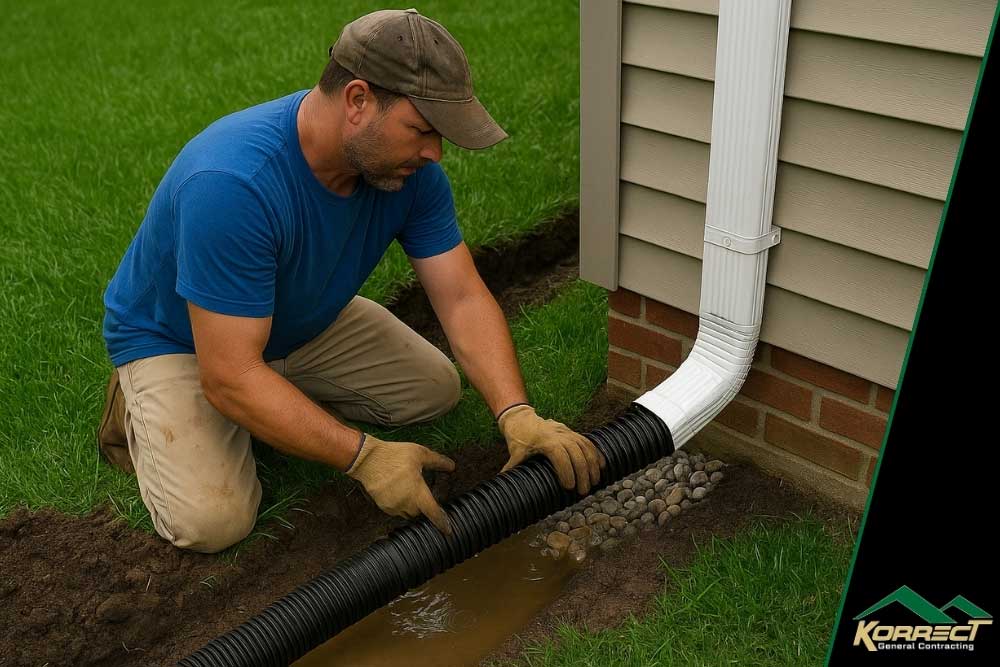
Your first line of defense is above the roof. Gutters collect rainwater and carry it to downspouts, which should direct it away from your home’s base. If gutters are clogged or misaligned, they can overflow and drop water directly around your foundation.
In Fort Worth, wind and storm debris can block gutters quickly. That is why cleaning them regularly and making sure downspouts are extended at least five feet from the house is essential. Extensions or underground drains can move water even farther from the structure to protect the soil and prevent saturation.
French Drains and Surface Drainage Options
A French drain is a trench system that collects water below the surface and moves it away from your home. These are ideal for homes built at the bottom of slopes or in areas with poor natural drainage. They work by collecting groundwater before it reaches the foundation and channeling it to a safer area.
Surface drainage systems, such as catch basins or channel drains, capture water above ground and guide it away. These are especially helpful near patios, driveways, and walkways where water tends to settle. For many Fort Worth properties, a combination of both types provides the most protection.
Grading and Slope Correction Around Your Home
The ground around your home should slope away to carry water naturally toward the street or yard edges. This is known as positive grading. If your property has settled over time or was not built with proper grading, water can flow toward your foundation instead.
Correcting the slope involves adding soil around the perimeter to build up a natural grade. A contractor will ensure the soil type is compatible with Texas conditions and resistant to erosion. Once installed, the area can be finished with grass, mulch, or landscaping as needed, without sacrificing the protective slope.
Sump Pumps for Interior Protection
In cases where water pressure builds up beneath the foundation, a sump pump may be required. These systems are installed in a pit at the lowest point of a crawlspace or basement. When water enters, the pump activates and removes it safely through a discharge pipe.
While less common in slab-on-grade homes, sump pumps can provide critical peace of mind for homes that have experienced repeated flooding or high groundwater levels. In Fort Worth’s wetter months, these systems protect the interior when exterior drainage is not enough.
When to Call a Fort Worth Contractor for Drainage Help
Evaluate Your Drainage Situation During a Rain Event
The best time to assess your property’s drainage performance is during or right after a rainstorm. Walk around your yard and look for water pooling, gutter overflow, or muddy soil near the foundation. Take photos and note areas that may need attention.
Homeowners in Fort Worth often notice these problems but wait too long to take action. Water management is not just about protecting your lawn or landscaping. It is about preserving the structural health of your home. The earlier you call a contractor, the easier and more affordable the fix will be.
Combine Foundation Repair with Drainage Upgrades
If your home already shows signs of foundation damage, correcting the drainage issue is part of the solution. A contractor will evaluate whether water is causing movement and offer a plan that includes structural repairs and external water control.
Korrect General Contracting provides full support for both problems. Our team inspects the entire property, not just the interior symptoms. If we see that drainage is creating instability, we may recommend installing a French drain, grading correction, or a new gutter system as part of the foundation repair.
Foundation issues in Fort Worth are rarely isolated. They are often the result of long-term moisture problems that go unaddressed. Treating the cause is just as important as treating the damage.
Protect Your Fort Worth Foundation with Korrect
Contact Us for Drainage and Foundation Services
Drainage problems are not just an inconvenience. They are a real threat to your home’s safety and long-term value. If you have noticed cracks, erosion, pooling water, or foundation changes, it is time to take action.
Korrect General Contracting helps homeowners across Fort Worth and nearby cities diagnose drainage issues and stop foundation damage before it worsens. We offer honest evaluations, reliable repairs, and real solutions based on Texas conditions.
Let us inspect your property and design a plan to move water away from your home and restore peace of mind.
Call us today at (817) 888-8827
Proudly serving Fort Worth, Arlington, Dallas, and surrounding areas
Visit korrect.crownmarketing.media/ to schedule your inspection
Related Posts

Why Pre Sale Foundation Inspections Matter in Fort Worth Real

Elevated Roofing Choices for DFW Homes in 2026 As roofing

A roof inspection in Fort Worth does far more than